Latest Entries »

Mile High Rush

Almost a month ago I had the unique opportunity of lining up outside Civic Center Park and the US Mint in Denver alongside nearly 15,000 other runners. While the temperatures may have been near freezing the energy of this group getting ready to participate in the Denver Rock ‘ N ‘ Roll 1/2 Marathon and Marathon was enough to keep me warm. While waiting in my designated corral for the sun to (hopefully) rise and the gun to go off I had a chance to reflect on what a crazy ride I went through to get here and what adventures would lay ahead over the next 13 miles. But let’s wind back a few weeks.

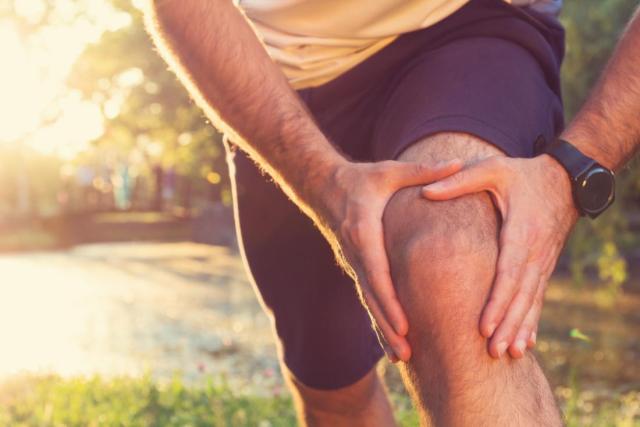
In the middle of September I just happened to be browsing the Brooks ID (Inspire Daily) website, as is my usual routine being part of their program, and came upon a new “tweet”. From time to time they send out Twitter alerts for free entries into Rock N Roll races since they are one of the primary race sponsors and  this Twitter alert was for Denver, only an hour away! Long story short, I was chosen as one of the members to receive a free race entry and, with a little less than 3 weeks until race day, I had to get back to some serious training. Over the next two weeks I upped my weekly mileage as high as my body would allow and peaked with a rough 10 mile run with just over a week until race day. Unfortunately, changing your weekly mileage is an easy way to get yourself injured and I found myself with a sore left foot that never fully healed after my last 1/2 marathon in August as well as a mysterious pain behind my left knee. Still I was determine to make it to the start line and represent Brooks so I did my best to rest, ice, and even was able to try out some KT  therapy tape. (I’ll have to do a review on it later)


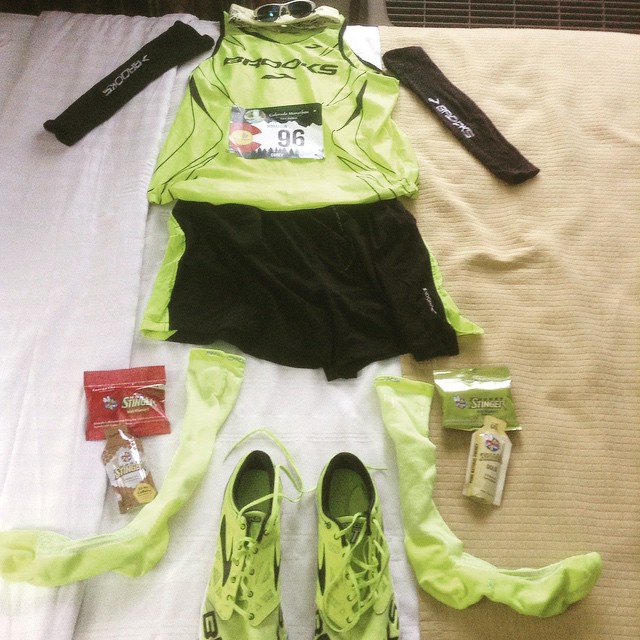
The day before the race I drove down from Fort Collins to pick up my packet and of course the weather was miserable; 3o degrees and snowing. Just yesterday I was outside in shorts and a t-shirt wondering how long 70 degree weather in Colorado could possibly last during the fall. Luckily Brooks had a station after packet pickup and I purchased a pair of their new seamless arm warmers to go with my ID jersey. On race morning I awoke at 5 AM to once again make the drive down to Denver and was even lucky to snag the same parking spot from the day before amidst thousands of other runners driving around downtown. Thankfully, the rain/snow from the previous day had stopped and the forecast called for a sunny and warm 40 degree day which wasn’t much of an improvement. Once again I was at the start line wearing my singlet, shorts, arm warmers, gloves, and headband wondering what was about to happen over the next few hours. As soon as the gun went off the elites were followed by Corral 1 which I was lucky to be a part of based on my predicted finish time (1 hour 35 minutes). Quickly I realized my knee pain wasn’t going to go away, but the cold weather served to numb the joint all-together. For the first two miles I took my time and was even able to talk with a few other runners, one was recovering from back surgery and had actually placed in the top 10 of the original Rock N Roll Denver race.  

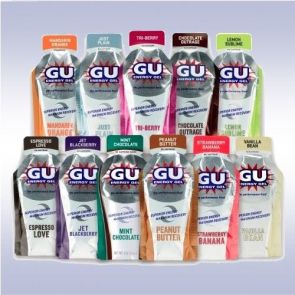
The course layout also helped distract me for the first several miles as we wove through downtown Denver passing the Pepsi Center, Union Station, and Coors Field before heading out of the skyscrapers towards City Park and the Denver Zoo. Eventually by mile 4 the sun was high enough to start providing warmth and the cool air kept me from sweating and overheating, maybe this cold day wasn’t so bad after all! After winding through the park at around mile 9 we were greeted with some surprising hills but more importantly a GU station to refuel. After taking my predetermined energy supplements my body was holding up quite well so I began to roll after mile 10, maybe the bands located around every mile marker were helping!

Just past the 11 mile marker participants of the 1/2 marathon had to bid farewell to their marathon counterparts who would turn south for another 13 miles or so. At this point I was greeted by the same man from mile 2 who once again began to chat with me, see how I was doing, and to offer words of encouragement. From here the course took us back into the heart of downtown and, even better, started heading downhill. My last 2 miles were the fastest of the race as I felt myself flying through the streets, rounding the corner at the Colorado State Capitol, and seeing the finish line only 200 meters away.

While my time of 1:33:42 was not a personal record I couldn’t help but feel that this was one of the best longer distance races that I have participated in. The course was beautiful, the weather was perfect, the bands along the way were encouraging, and the other participants were very friendly and inspiring. This is what make running and other runners special to me – great experiences can happen anywhere!

Happy Running! – Corey

End of Summer Shopping

For all you runners the end of summer means many things. The main racing season is over, there less time than ever for training with work/school/life back in full swing, and more than likely time to replace the past years gear. Well, the people over at Brooks couldn’t agree more, which is why their new fall lineup is release in mid-July which will soon be followed by their new shoe program, the PureProject, set to be released in October.

One of the exciting new colors for the women's Ininity Jacket!

The Men's Infinity Jacket also comes in blue and gray/red colors.

According to Brooks the PureProject “introduces a unique way to experience your run by promoting a natural stride in an incredibly lightweight shoe. Knowing that simply removing parts of the shoe would result in poor performance, we took a proactive approach to biomechanical needs by developing five innovative technologies that engage the foot naturally, and with significantly fewer parts than a standard shoe. Breathable fabrics, radically flexible materials, and an extremely low profile complete the package to bring you a run for the senses. It’s what we call the “Feel More with Less” experience. Basically it seems that Brooks has found a compromise between barefoot purists and runners who will stand by their favorite pair of training shoes no matter what the weight.”   Here is just a taste of what they have in store:

I have seen these shoes at a recent race expo and I can already tell you how great these shoes look and how light they feel, pre-order yours today at www.BrooksRunning.com

BrooksRunning.com - Free Shipping Over $75

Some new additions to their apparel for the fall lineup include the return of the Infinity Jacket in bright new colors, a new line of apparel called the Silver Bullet which includes pants and a jacket, as well as the long anticipated Arm Warmers and several new types and colors of running socks.

So feel free to splurge a little of your hard earned summer cash and get geared up to run through the fall and winter, don’t forget to preorder your PureProject shoes — Now Available for Pre-Order! Brooks PureProject, only at BrooksRunning.com!

Happy Running! – Corey

Product Review – Brooks Green Silence

In the summer of 2009 I was one of the lucky few chosen by the Brooks Wear Tester Program to run in their new racing flats, Brooks Green Silence, which were officially released in 2010. The Wear Test Program is designed by Brooks to allow runners to test their new shoes before they are officially released in order to get multiple reviews from many types of runners and to determine the durability of their design. Each month, I was required to rate the shoes, and after three months I had to fill out a final review form and then resend the shoes back in for further analysis.


To begin with, the design of these shoes was very innovative as the tongue opens only on one side in order to reduce the “pinching” effect that can sometimes happen with traditional tongues. Brooks has primarily promoted these shoes for being environmentally friendly which seems true since these racing flats are composed of 75% post-consumer recycled materials! Although the cushioning appears minimal and the sole is nearly flat the Green Silence felt molded to my feet and were feather-light. (Actual weight : 6.9 0z.) The biggest benefit was that after each of my races I was not left with the intense foot, Achilles, and calf pain that most racing flats create with their lack of heel cushioning to save on weight.

With the start of a new summer racing season, Brooks has announced their new colors for the Green Silence. Maybe I’m just a running nerd, but I love the crazy color combinations that they have put into this line.

Mens:

Womens:

Even with all the color and design changes to these shoes, Brooks has stayed true to their goal and have created these shoes to be as “green” as possible. In fact, the 2011 line features have the shoe’s insole, collar foam, midsole, and sockliner all 100% biodegradable while the colors are made from 100% non-toxic dyes. To learn more about these shoes please visit the Brooks Blog. The new design colors are scheduled to be released in June 2011, so if you are looking for some fast racing shoes for your summer season on the road, I would highly recommend taking a spin in the Brooks Green Silence.

Happy Running! -Corey

Nearly perfect weather conditions and a generous tailwind provided some of the fastest marathon times in history at the 115th Boston Marathon this past Monday. In 2010, Robert Kiprono Cheruiyot blazed to a new course record in 2:05:52 which was then considered a remarkable feat on a tough course. Amazingly, four runners this year were able to run under the 2 hour and 5 minute mark including American Ryan Hall who finished 4th in 2:04:58. Even more amazing was Geoffrey Mutai’s winning time of 2:03:02 which was almost a minute faster than Haile Gebrselassie’s world record time set at the Berlin Marathon. Unfortunatley Mutai’s time will not be counted as an official world record by the IAAF since there is a drop in elevation from start to finish and the whole race was considered to be wind-aided.

On the women’s side, America came within seconds of its first victory, male or female, since 1985 when Lisa Larsen-Weidenbach captured the title. Desiree Davila was locked in a tight battle running the final 1200 meters down Boylston Street with two Kenyan runners. In fact, she was even able to surge into the lead with less than 400 meters remaining, but the Kenyan Kilel outsprinted her to take the title by only 2 seconds. Still, Americans should be proud and excited at the huge strides that were made for distance running by Ryan Hall and Desiree Davila. Both these athletes have committed their lives to training year-round for these races with other elite American athletes. However, funding for these programs is limited and if Americans are expected to be able to compete with Kenyans and Ethiopians, we must continue running camps and elite groups.

Recently I have been reading Ryan Hall’s book Running With Joy which describes his training and thoughts before entering the 2010 Boston Marathon. During this time period he spent much of his time training with the Mammoth Track Club and he also discusses how much progress it has made with elite American distance running. It is amazing how Hall treats training for these races as a full time job since it takes up all of his day with distance running, recovery naps, sponsor events, and eating enough calories to maintain his work level. This book also displays Hall’s deep religious love for Christ and he continually displays that in how he approaches running. He feels that God made him to be a great distance runner so Hall is focused on that thought and trying to always run with joy. I cannot wait to see what Hall, Devila, and other American distance runners can do with the 2012 Summer Olympics just around the corner. Until then:

Happy Running! – Corey

iPods and Running

If you are an avid runner I know how excited you are when you see the title of this post. Oh, joy here we go again. I just want to break down this argument into a brief and simple comparison, after a little background of course.

Music creates rhythms and beats and running is often keyed off of keeping a stead rhythm (pace) and beat (heart rate). It makes sense that as soon as MP3 players became small enough, they were strapped onto people’s arms and sent running out the door. But many race officials, especially USATF sanctioned races, have developed a zero tolerance policy for these seemingly harmless devices. Most directors claim that runners with iPods are less aware of their surrounding and are more likely to cause a serious accident. While I have only run with an iPod a handful of times and never during a race, I can understand the arguments of both sides. Let’s compare:

Benefits of Wearing iPods:

  • Music keeps your drive up to push faster
  • Helps you zone out when the run gets painful
  • Creates a rhythm to run to
  • Funny people jamming out to Techno, Hard rock, and even Country are fun to watch
  • Adds to the personal enjoyment of the run
  • You should race how you train and you always wear it for training runs


Hindrances of Wearing iPods:

  • Distracts you from people, cars, and other things around you
  • Takes away from the natural beauty of the run
  • Keeps you from mentally focusing on the task at hand
  • Can get tangled up and get in the way of your form
  • You sing to the music…badly. Nobody wants to hear Justin Bieber anyway.

So far I have not seen or read any stories or studies that have directly linked iPods as the cause of more running accidents. In the end it really comes down to personal preference on your training run whether or not to wear an iPod. I choose not be because I am constantly messing around with the headphones and I love to enjoy the sounds of nature and my breathing during the run. However, in a race where iPods are not allowed I think you should respect the rules or find a different race to run in. Hopefully your iPod dependency has not grown so strong that you cannot run a few steps without your favorite Taylor Swift song playing. Just remember not to get carried away:

Happy Running! – Corey

The Lure of the Mountain

While most average runners spend their time training for community races ranging from 5K’s to Marathons, there are a few odd-balls who choose to run for a different purpose, or should I say in a different direction. In my hometown of Colorado Springs, August in the running community is known as the month in which thousands of competitors gather to compete in ”America’s Ultimate Challenge.” Ironically, the event(s) that these runners will be partaking in will force most to walk more than they run, it will leave many bleeding and others reeling for oxygen,  and most will still end up in worse shape that after running a marathon. This challenge is the Pikes Peak Marathon (PPM) and the Pikes Peak Ascent (PPA) which always takes place during the 3rd weekend in August.

Upon arriving in Colorado Springs, Pikes Peak looms over the entire city as a grand and majestic mountain that watches over you wherever you go. The peak stands as one of Colorado’s most recognizable Fourteeners reaching 14,115′ above sea level with a very large face above treeline. It is here that these odd-ball runners choose to race uphill and sometimes downhill in order to put their body and mind to the ultimate test. For those competing in the Ascent, they must begin in Manitou Springs and make their journey up Barr Trail in hopes of reaching the peak’s summit after 13.32 miles. Even more impressive is the fact that during this trip up the trail, the runners will be gaining 7,815′ in elevation which translates to almost 1.5 miles in vertical gain!

Still, other mountain runners choose to accept a tougher challenge the next day by competing in the traditional PPM which follows the Ascent course up Pikes Peak and then heads back down into the city for a full 26.2 mile marathon. The added challenge here is not only the extended time spend above treeline, where the oxygen levels are much lower, but fatigue can play a huge factor on the way down. Many runners find that their legs are not as easy to lift after working so hard to get up the mountain and thus they get tripped up on roots or rocks and reach the finish line bloodied and bruised.

But, Pikes Peak has one last challenge for the insane trail runners who want to push their mind and body to the max – the dreaded Double. While participants that sign up to compete in the Double will receive a discount in the registration price, they will have to pay for it on race weekend. Doublers wake up Saturday to run in the Ascent and then less than 24 hours later they assemble back at the starting line Sunday morning to complete the Marathon. Last year alone there was over 111 competitors who were able to successfully complete the Double, a truly remarkable task.

The peak is constantly taunting you at every point. Even at this flatter section of Barr Trail, Pikes Peak looms in the background looking impossibly far away.

As if all that doesn’t sound hard enough, the peak is constantly throwing new obstacles at the runners to make the journey even more challenging. Like I mentioned earlier, rocks and roots often trips runners on the way down, but that can also cause runners to roll their ankles on the way up. Above treeline the air becomes so thin that you will find many competitors taking a seat on the large boulders just trying to catch their breath. At this point the race for a majority of the participants becomes a slow and steady walk up the winding trail as most people are content to form a line without concern for place. In 2008, something worse happened to these runners that left quite an impression on every entrant to the Pikes Peak Ascent; a late fall storm. At the beginning of the race that year the conditions were cold and cloudy, but as the first wave began its trip thunder could be heard and it began to rain, hail, and finally snow at higher elevations. For most of the people in the 2nd wave, which starts 30 minutes later, they were turned around before A-Frame in order to stay away from the lightning and risk being completely exposed to the conditions. Unfortunately for them, A-Frame is over 10 miles up the trail which meant a depressing and very cold walk back down the trail in order to get to safety. This peak is truly relentless and entrants must be prepared for any type of weather since it can change in a matter of hours at the summit.

Doesn't this look like fun?

In order to properly prepare for this race and other mountain races up Barr Trail, a group of mountain runners formed the Incline Club. This club meets most Thursdays and Sundays starting in late November and trains on local mountain trails up until race weekend in August. I spoke with one of the leaders of the Incline Club, John Garner, to see why mountain and trail running appealed to him and the club over normal running and road racing. Here is what he had to say:

“For most folks, they find that in general trail running is easier on their system. So they can run longer and avoid many of the volume based injuries that seem to plague the pure road running crowd.  When running on the road, every step is the same, the pace is generally faster and thus injuries from poor technique will quickly crop up. I found that I could get away with things (poor form, wrong shoes, etc) when running on the trail that I could never do when running on the road (ever see anybody heel strike when running up a hill? Nope, me neither). Also, when running along a trail I don’t need to watch for cars, the scenery is much nicer and the noise pollution is almost nonexistent. Also the varying terrain will force you to mentally pay attention. When running along the road boredom can quickly strike. When running along a good trail, you constantly need to pay attention to the obstacles in your way and adjust. You can’t really just zone out and listen to your iPod like you can on the road.

Now some of this is location dependent. Back home in NJ, there were no good trails to run on, all you had was the road. So out there if you were a runner, then buy default you would spend the majority of your time on the road. Trail running was a novel concept that few had an option of doing, much like surfing in Colorado. Out here, the trail system is such that given the choice between the road and a trail, the road has a number of disadvantages (i.e. cars) that you don’t find on the trails. The trails out here are also varied in their difficulty from very easy(Santa Fe) to very difficult (Barr) and everything in between (Waldo, red rock canyon, section 16, etc) that you can pick what type and distance of the workout you want.”

I myself have also noticed many of these things while running/hiking up Barr Trail and competing in the PPA. Trails are more about maneuvering skills than speed, you plan out your attack instead or just running a straight line up the path. Once you get a few miles up the trail you really notice the peace and serenity, along with view of Colorado Springs below, which is remarkable. Perhaps this is the reason that so many people return year after year, the natural beauty of the trail allows them to endure a racing experience full of pain and still walk away proud of their accomplishments and addicted to what Barr Trail has to offer.

Check out the trailer for the 2010 DVD shot by Chuck Fryberger Films:

Happy Running! -Corey


Last May Chris Solinsky, a prominent 5-kilometer distance runner, took part in his first 10,000 meter race setup by Galen Rupp with the goal of breaking records. Galen Rupp had assembled a field of experienced runners at Palo Alto, CA who all looked to break several records including the American 10K record with Rupp as the leading candidate as the new record holder. Amazingly, during the race Solinsky maintained pace with the leaders and broke away with just over 800 meters remaining to smash the previous record by over 13 seconds. The one thing that stood out to me when I saw the race recap the next day was that Solinsky seemed to be the only one wearing knee-high compression socks. Did these have anything to do with his shocking and speedy premiere at this distance or should he have always been running the 10K race competitively?

Elite runners over the past few years like Chris Solinsky and Paula Radcliffe, world record holder in the marathoner, have shown an increasing trend of wearing compression socks during their competition. Running companies are also working on their only lines of arm sleeves and compression socks with their increasing popularity. While it cannot be proven that these socks helped their performances, the science and theory behind muscle compression is intriguing.

While running, the muscles are continually working to contract and relax while receiving oxygen-rich blood from the heart. When the muscles are compressed further, like with these socks, the return of blood to the heart is supposedly increased which means that oxygen can be returned at a higher rate. This increased oxygen transfer rate is pivotal to distance running because it helps speed up lactic acid removal and increases the efficiency of the leg muscle’s work (i.e. they will have greater endurance). Another view is that the compression helps keep the muscles stabilized and compact which helps prevent injury by improving form and limiting motion during running.

After a medical study in 2007 by the American College of Sports Medicine it was found that there was not increased oxygen transfer or blood flow with compression socks worn while running. However, when the muscles are compressed during a resting period the blood vessels are compressed in such a way to help improve blood flow and prevent the blood from accumulating into pools in the legs. This improved flow greatly decreases the average lactate recovery time for runners which can be quite significant depending on the fatigue of the muscles.

Overall,  runners wearing compression socks during competition may not be wearing them because it is scientifically shown to improve their running ability, beyond a possible placebo effect,  but it certainly gives them an advantage when worn after their race. It certainly gives me something to think about the next time my legs feel horrible after a hard run.

Happy Running! -Corey

When I am not brave enough to endure the chilling winter running weather I often read a few running related books to help increase my knowledge, gain a new perspective, or just soak in an inspirational story. This year I was finally able to read Running With the Buffaloes by Chris Lear. The author was also a strong runner who attended Princeton University and ran on their cross country team before moving to Boulder, CO to settle down. His book follows the 1998 University of Colorado Men’s Cross Country team as they work to win a national title with a strong core of runners.

Without giving too much away on the storyline, the books has a unique organization as it is written as a journal or daily workouts or events that stood as important milestone’s in the training season. Coach Mark Wetmore is continuously displayed as a “different” style of coach who is constantly running through the numbers to make sure his athletes are ready for peak running.

Wetmore follows the Lydiard training method which recommends high mileage during the season which is why most of his Varsity runners are averaging close to 100-mile weeks. Only adding to this tough task is the uphill workouts that Wetmore loves, especially Magnolia Road, also known as Mags, which the team runs every Sunday. Wetmore is also very critical of his athlete’s time splits, body weights, nutritional intake, and he encourages his athletes to keep their own journals to keep up on their own progress.

At the start of the season the Buffaloes are poised to be one of the top contenders for this years team title with one of the best runners in nation, Adam Goucher. However, injuries continue to plague the team throughout the season and an unexpected, tragic death sends the team reeling midseason. This book contains drama so real that is appears to be scripted, but any runner reading this could relate to many of the pains and struggles that these elite athletes are experiencing.

Adam Goucher leading the way.


Overall, the deep detail that Chris Lear divulges into can be a bit tough for a reader that is not a devote runner, but he captures the spirit of running with the various heartaches and triumphs during the 1998 season. This book deserves to be one of any runners top 5 books that can be read again and again.

Happy Running! – Corey

Show Me the Carbs!

Carbo-loading is supposed to be very beneficial to the performance of endurance athletes, but what is it exactly and what is the best loading method? 

The Basics:

Carbohydrate loading is focused on increasing the amount of glycogen that your body, especially your muscles, holds during an endurance event or extended period of increased activity. The goal of this loading is to fill up your muscle’s glycogen stores until they become supersaturated, which is known as glycogen supercompensation.


Early Approach:

In the late athletes adopted the 7-day carbo-loading regiment which was developed by a Swedish physiologist named Gunvar Ahlborg. The initial 3-4 days of this method saw the athletes amp up their training to a high level while consuming less than usual amounts of carbs (less than 50% of their total calories). The principle behind this was to empty out their muscle’s glycogen stores before refilling them. During the final 3-4 days of loading, the intensity of the athletes’ training gradually tapered while they were consuming up to 75% of their daily calories via carbohydrates. While this technique of loading worked, the initial phase of stripping your muscles of all their glycogen left athletes fatigued, irritable, and could often lead to injuries.


Modified Technique:

Later research in the 1980s went on to find that the initial stage of starving your muscles was not necessary to attain maximum glycogen levels by race day. Nowadays the safest carbo-loading method is to eat normally up until 3 days before your race while still training at a higher intensity level. Then, you should switch up your carbohydrate intake to 70% of your calories until race day, while easing up on your workout level. This technique not only attains glycogen supercompensation, but it also saves an athlete from having to harm their muscles, body, and mind when depleting their glycogen stores.


Who Is It For?

Ironically, carbo-loading is not useful for many types of the runners/athletes who spend time following a carbohydrate intake regiment. Research has shown that carbohydrate-loading will increase your endurance levels by about 20%, but only when the length of the activity is over 90 minutes. This means that for your average 5K or 10K runner, glycogen depletion cannot be felt during the race and will not affect you. There are, however, professional sports in which carbo-loading is important due to the high level of intensity and length of play. Soccer, basketball, and hockey are all examples of sports where the athletes could actually see benefits from carbo-loading prior to their games.


High Carbohydrate Food and Drink:

Drink – The companies who produce sports drinks, like Gatorade and PowerAde, all have  some amounts of carbohydrates in their products to help increase endurance levels. The average sports drink, also known as an isotonic sports drink, contain about 6-8% carbs as well as electrolytes. For high levels of endurance, hypertonic sports drinks such as Endurox or the Gatorade Performance Series contain up to 15% carbohydrates and are commonly used by runners, especially at the marathon distance, as well as triathletes, and other endurance athletes.

Food – The most well-known high-carbohydrate foods are the different varieties of pastas which contain around 40 grams of carbohydrates per cup. PowerBars, fresh fruits, cereal, and some breads are all good sources of carbohydrates to help you fuel up for race day!


Happy Running! – Corey


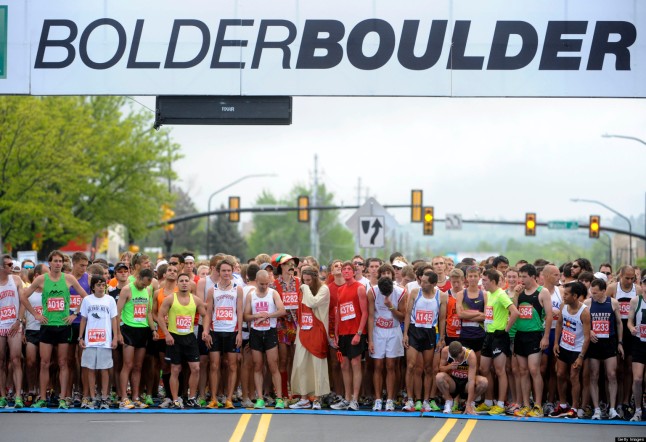
One of the nation’s largest road races, the Bolder Boulder 10K, will undergo some of its most serious course changes in its 32 year history. In order to improve transportation to the start line and create a shorter distance between the start and finish, race organizers have altered the first 2 kilometers of the race. Instead of runners lining up at 30th and Iris Street ready to head south, they will commence at 30th and Walnut Street and begin heading north. A link to the new course map can be found here. To many this news may seem insignificant, but the Bolder Boulder has become one of the largest Memorial Day gatherings in the United States with over 50,000 competitors annually. With this large number of competitors this has also become the nation’s second largest 10K race behind the Atlanta Peachtree 10K which plans to have 60,000 entrants this year.  

Founded by Steve Bosley and starting in 1979 with only 2,700 runners, the Bolder Boulder has become a favorite holiday tradition for many Colorado citizens, as well as runners around the nation. The race features over 90 waves with the top 30 reserved for entrants who have run a qualifying time at, or equivalent to, a 68-minute finish for a 10 kilometer race. Beyond these qualifying waves there are also waves dedicated for middle-school runners, Boulder’s local radio station (KBCO), military runners, and even walkers. During the race competitors weave through the streets of Boulder and are greeted by musical shows placed throughout the course, as well as friends, fans, belly dancers, and college students partying on their front lawn. (It is not uncommon to see a runner bolt off course in the middle of the race in order to jump on a Slip-N-Slide or into an inflatable kiddie pool to get the college kids even more excited!)

Many fans and competitors also dress up for this race in order to bring a smile to the faces of other runners with costumes including Elvis, a jogging banana, a group of Smurfs, and even a gorilla who led the race for the first quarter-mile in 2008. As soon as the gun for your wave goes off people are cheering you on from the sidelines, making this one of the easiest 10Ks by keeping you distracted the whole race! One of this races’ signature features is the finish as runners make their way into Folsom Field to finish in front of thousands of fans and previous finishers who are filling the stadium. Running in front of all these people is indescribable ,  giving regular people an opportunity to enter a packed, cheering stadium which is an experience that only professional athletes have previously had the privilege of enjoying.

After the race, finishers are guided through CU’s indoor track facility to get water, soda, or even a cold beer if you are old enough, followed by a sack-lunch full of goodies to be consumed once you can stand up! Another popular post-race activity is the Race Day Expo located on the lawn just south of Folsom Field. Here thousands of companies have set up booths to advertise new products and, best of all, give away plenty of free samples. Many competitors leave the expo with bags bursting full of drinks, energy bars, frozen fruit bars, hats, and anything else they could get their hands on. Once your stomach has been properly nourished, finishers slowly file their way into the stadium to watch the latter waves run or walk across the start line.

 After about 3 hours the elite runners begin their pre-race warmouts and the teams are announced to the crowd at Folsom.. While they are being transported to the start line fans are treated to a true Memorial Day ceremony with the parachuters flying into the stadium, an honoring of  war veterans who received the Medal of Honor, a 21-gun salute, and a military-jet flyover. Finally the elite race if broadcast on the stadium’s screen and once the athletes enter the stadium the citizen-race participants become fans as the stadium comes to life with cheers of respect for the professional athletes. For an insider’s view of the full race experience you can check out the video below from Boulder’s own Ryan Van Duzer, AKA the “Out There Guy”, who takes time every year to document his race and post-race adventures! From start to finish this race truly has something to offer for people of all ages, so this Memorial Day maybe you might want to stop by Boulder for a unique running experience.

Happy Running!  -Corey

Follow

Get every new post delivered to your Inbox.